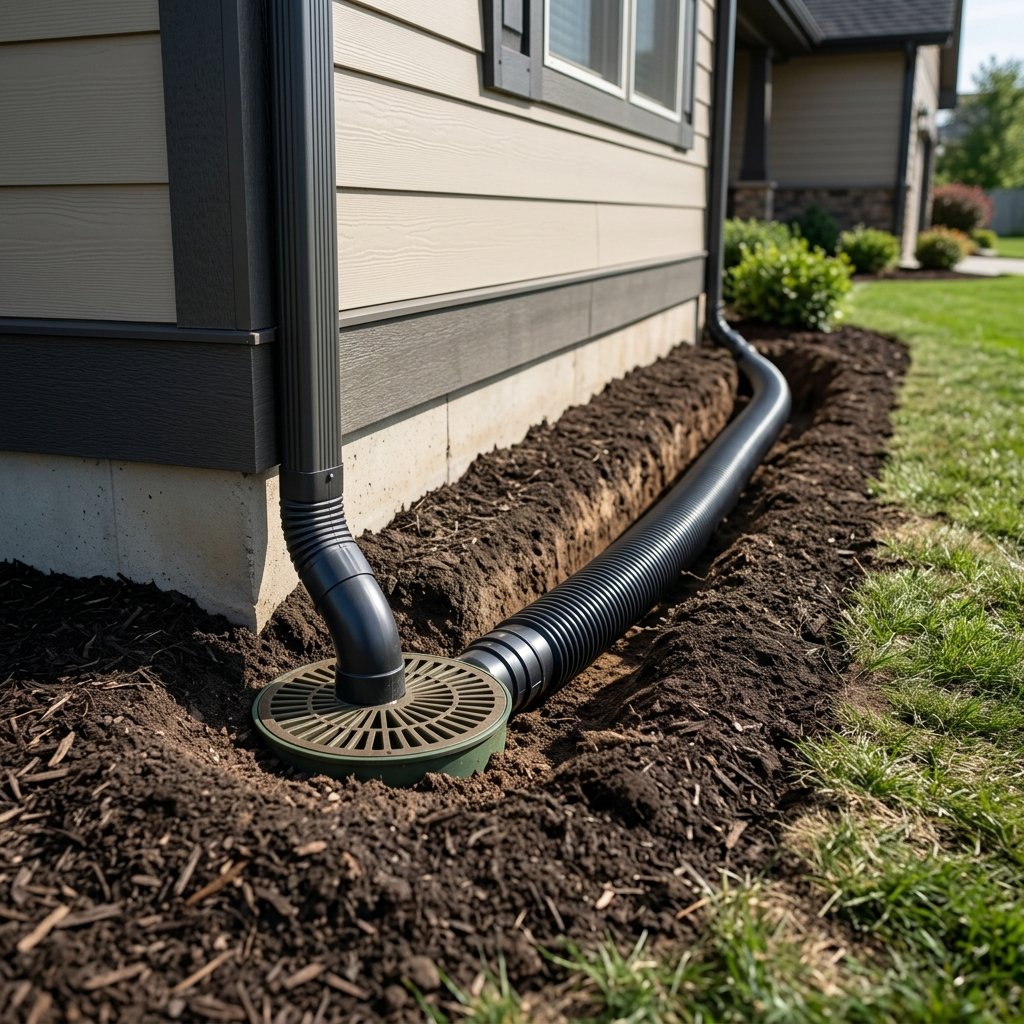
One inch of rain on an average Nashville roof produces over 600 gallons of water — and if your downspouts dump it right next to your foundation, a large portion of it ends up in your crawlspace. Downspout extensions are a simple, affordable fix that prevents one of the most common sources of crawlspace water intrusion.
Most homes are built with downspouts that terminate just a foot or two from the foundation. During a heavy rain, that creates a concentrated stream of water that saturates the soil immediately adjacent to your foundation walls. From there:
The fix costs a fraction of what it prevents. Extending downspouts to discharge at least 6–10 feet from the foundation — ideally to a slope or drainage channel — is one of the highest-ROI improvements you can make to protect your crawlspace.
The right solution depends on your yard grade, landscaping, and how much water your roof sheds. We assess each downspout and recommend the best approach.
Low-profile aluminum sections that match your existing gutter system color. Extend discharge point 4–6 feet from the foundation with a clean, finished look.
For homes where surface extensions would obstruct walkways or landscaping, we bury a drain pipe that carries water underground to a safe discharge point in the yard.
Underground pipe terminates in a pop-up emitter that opens automatically when water flows and closes when dry — keeping debris and pests out of the pipe.
Sometimes the issue is negative grade (ground slopes toward the house). We correct the grade and add appropriate surface drainage to redirect water away.
For budget-conscious fixes, coiled extensions that unroll during rain and retract when dry provide a simple, effective discharge extension for most downspouts.
We assess your entire gutter system for pitch, debris, and overflow points — and flag any issues that would negate the extension work.
The general rule is at least 6 feet for surface extensions. For underground buried pipes, we typically discharge 8–10 feet out at minimum, aimed at a sloped area or drainage swale. The further the better, as long as it doesn't create a problem for neighboring properties.
They can over time, especially with leaf debris. We use perforated-free solid pipe for downspout discharge runs and install cleanout access points where needed. With a pop-up emitter at the end, the system can be flushed easily if it ever becomes sluggish.
Your sump pump handles water after it gets in. Downspout extensions reduce how much water reaches your foundation in the first place. Both are part of a complete moisture management strategy — and reducing the load on your sump pump extends its life significantly.